The Forever Legacy System, Explained: 65 Challenges, 16 Points, Three Trees
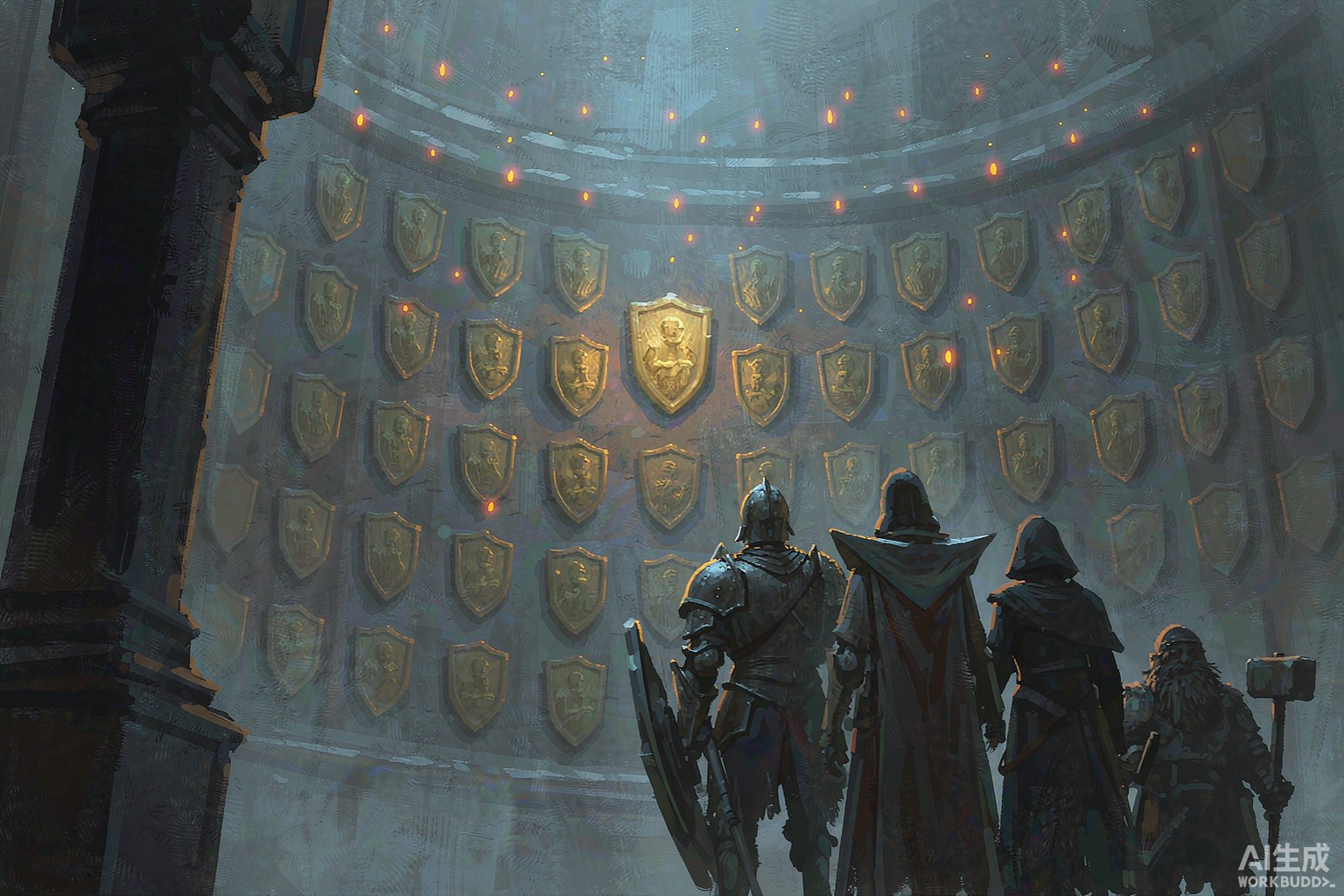
Original editorial illustration by RealmList, generated for this article. This is artwork, not game footage or official promotional material.
Forever's headline systems so far have mostly been about what the game is — a permanent level 60 cap, no flying mounts, a single realm per region instead of named servers. The Legacy System, published in full on September 23, is the first one that is about what you do with a decade of that world. It is account-wide, it is deliberately capped, and its structure tells you a lot about who Blizzard thinks is actually going to play this.
This is the complete breakdown.
How you unlock it
You gain access to the Legacy System the moment you earn your first Legacy Point. There are three routes to that first point:
| Route | Requirement |
|---|---|
| Levelling | First character reaches level 25 |
| Tradeskills | Reach 150 in a non-gathering primary profession |
| Exploration | Explore the entire world map |
Once unlocked, it opens from a shield icon in the menu or the default hotkey Y.
The level 25 entry point is the interesting choice. In a game whose whole pitch is a 1–60 journey, the account-wide progression layer switches on less than halfway up — early enough that it shapes a first playthrough rather than sitting at the end of one.
65 challenges, six categories
Legacy Challenges work like achievements, but they are scored: each completed challenge awards exactly one Legacy Point. There are 65 challenges in total, split across six categories. Points are Battle.net account-wide and available to every non-Hardcore character.
| Category | Max points | What earns them |
|---|---|---|
| Classes | 27 | For each of the nine classes: reach level 25, 45 and 60 |
| Tradeskills | 18 | For each non-gathering primary profession: reach 150, 225 and 300 skill |
| Player vs. Player | 12 | Reach ranks 3, 7, 10, 13 and 14 (5 pts); Exalted with each battleground reputation (4 pts); complete the week 4, 7 and 10 Field of Honor Season's Journey quests (3 pts) |
| Dungeons | 3 | Defeat the final boss of every level 15–25 dungeon; every 26–45 dungeon; every 46–60 dungeon |
| Raids | 3 | Defeat Onyxia; defeat all 13 Hyjal Summit bosses; defeat all 8 Barrow Deeps bosses |
| Adventure | 2 | Explore the entire world map on one character; complete the Lord Valthalak dungeon set questline |
Two things stand out immediately.
PvP is the second-largest single bucket at 12 points, behind only the nine-class grind. Rank 14 alone is a commitment measured in months of a bracketed honour system, and Blizzard has paired it with three battleground reputations and a seasonal quest chain. For a game that has spent most of its marketing on the open world and the levelling journey, the Legacy System prices PvP the same way the original honour system did — as the single most time-expensive thing you can do.
Dungeons and raids together are worth 6 points. That is the entire PvE endgame of the first content tier, priced below a single rank-14 climb. Whatever else Forever is, its account-wide progression does not pay you to raid.
The 16-point cap is the actual design
Here is the number that matters most:
At launch, each character can spend up to 16 Legacy Points. Learning does not stop at 16 — the points keep accumulating on your account for the rewards track — but no single character can spend more than 16.
Blizzard gives two reasons, and both are worth reading carefully. First, "new players will not be so far behind established players that they can't catch up." Second, 16 points can be reached on one character, so alts are not required.
That second claim is checkable against their own maths. A single character can generate:
| Source | Points available on one character |
|---|---|
| Levelling to 60 | 3 |
| Tradeskills | up to 6 |
| PvP | 12 |
| Adventure | 2 |
| Dungeons and raids | 6 |
| Total | up to 29 |
So one character can fund 29 points — nearly twice the spend cap. The 16-point ceiling is therefore not really a limit on what you can earn; it is a limit on how much of your account's power can be concentrated into a single character at once. That is a deliberately flat curve, and it is the clearest statement yet of the "horizontal progression" philosophy Blizzard has been repeating since BlizzCon.
The three perk trees
Every character spends points independently. The same account-wide pool can be allocated differently per character, which is what makes the system work with alts rather than against them.
Professions
| Perk | Effect |
|---|---|
| Working Overtime | Higher chance to gain a skill point in all tradeskills, including class-specific ones like Lockpicking |
| Bountiful Harvest | Find additional Scarce resources when mining, herbing or skinning |
| Bartering | Reduces the gold price of items bought from vendors |
| Performance | Chance for increased Merchant's Favor from the Azeroth Commerce Authority (Alliance) or Durotar Supply and Logistics (Horde) |
| Master Chef | Chance for cooking recipes to produce additional results |
| Luremaster | Chance to fish up extra fish |
| Dedicated Study | A daily cooldown that speeds tradeskill growth, or grants free Elemental Essences once all professions are at 300 |
Those two factions — the Azeroth Commerce Authority and Durotar Supply and Logistics — are new and are described as a major source of new tradeskill activity, not just a perk vendor.
Adventure
| Perk | Effect |
|---|---|
| Well Rested | Raises the rested experience cap and speeds rested accumulation |
| Thrill of Adventure | Restores a small amount of health and mana after every non-trivial kill |
| High Alert | Increases stealth detection outside battlegrounds |
| Field Guide | Cuts the 1-hour cooldown on placing camping features |
| Field Medicine | Shortens the Recently Bandaged debuff — but not in dungeons, raids or battlegrounds |
| Talented | Unlocks talent points up to five levels earlier than normal |
| Frequent Flier | Cheaper and faster flight paths |
Two of these are quietly large. Talented moves the whole talent curve forward by five levels, which for most classes changes which abilities you have during a bracket rather than at the end of one. Field Guide exists only because of the Camping system, and it confirms how central camping is meant to be: the perk is the price of admission for the people who want to relocate their camp often.
Resourcefulness
| Perk | Effect |
|---|---|
| Gourmand | Longer duration on food buffs |
| The Quick and the Dead | Dead players move faster when running back to their corpse, and party/raid buffs are free after resurrection |
| Reinforce | Reduces durability damage from death |
| For Great Honor | Increases honour gains from PvP |
| Permanence | Longer duration on party, raid and camping buffs |
| Diplomat | Increases reputation gains |
| Reagent Economy | Class abilities stop requiring purchasable reagents, and tier 1 camping features require no materials to craft |
Reagent Economy is the most consequential perk in the system for anyone who has played a Vanilla-era Warlock, Shaman or Druid. Ankhs, soul shards and reagents were a real logistical tax in 2004, and removing them while keeping the class fantasy is exactly the kind of "quality of life without changing the game" trade Blizzard has been promising.
The Quick and the Dead is worth flagging for a different reason. Making party and raid buffs free after a resurrection is a wipe-recovery perk — the first time Forever has acknowledged in a progression system that death costs are a design lever. It is also the sort of perk that will look like a patch note while quietly changing how much of a raid night is spent re-buffing.
Rewards track
Separately from perks, accumulated points unlock cosmetics and toys account-wide. Four at launch:
- Replica Ironforge Air Rifle — a toy for shootouts with other players; stuns and keeps score
- Spectral Bear Cub — a pet inspired by the Dwarven Hunter and his companion in the Forever cinematic
- Spectral Bear Tabard
- Reins of the Spectral Bear — a spectral mount
New rewards are planned with every content update.
Where Hardcore fits
Hardcore is not available at launch, and the Legacy System's Hardcore rules are more generous than the reverse case:
- Challenges completed on non-Hardcore rulesets do not show up in Hardcore.
- Challenges earned in Hardcore grant that challenge in all other rulesets.
- PvP challenges cannot be completed in Hardcore.
- Hardcore launch adds 12 new Hardcore-specific challenges.
So Hardcore is a one-way source of progress that also locks you out of a fifth of the base list. Anyone planning to level Hardcore first is trading 12 points of PvP access for prestige and a faster overall points route later.
What this tells you about planning
Three practical consequences:
- Do not roll an alt for Legacy's sake at launch. One character can carry 29 of the 65 points, and no character can spend more than 16. The system rewards breadth of activity on a single character far more than it rewards a stable of level 25s.
- Pick your tree around your content, not your class. Professions perks pay you in gold and materials; Resourcefulness perks pay you in raid and dungeon time; Adventure perks pay you in overland efficiency. Because allocation is per character, a raiding main and a farming alt should sit in different trees — that is the intended use.
- If you intend to PvP at all, start early. Rank 14, four battleground reputations and a seasonal quest chain are the tallest single wall in the system, and the points they produce are the ones most likely to be wasted once the 16-cap bites.
The system is explicitly described as an infancy state: new challenges with each content release, new perks inside the existing trees for now, new trees later, and Hardcore-specific challenges and perks on top. What exists on launch day is the first slice of an account-wide ladder Blizzard intends to keep for years.
For everything else about getting into the game, see our beta access guide and the full breakdown of the new race and class combinations that the Classes and Tradeskills challenges are built around.
Sources and further reading
External references used to verify or expand this article.